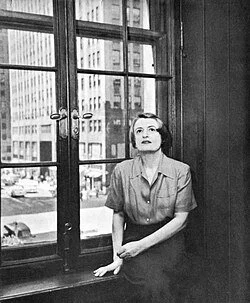
Ayn Rand
Ayn Rand was a Russian-American novelist and philosopher known for developing the philosophy of Objectivism. Her life was defined by a fierce opposition to collectivism and an uncompromising defence of individualism and laissez-faire capitalism.
Birth and Childhood in Revolutionary Russia
Born Alisa Zinovyevna Rosenbaum in 1905 in St. Petersburg, Rand was the eldest of three daughters in a bourgeois Jewish family. Her father was a successful pharmacist, but their comfortable life was upended by the Russian Revolution of 1917.
The Bolsheviks nationalised her father’s pharmacy, plunging the family into poverty and near-starvation. After graduating from Petrograd State University, she obtained a visa to visit relatives in the United States in 1926 and never looked back.
Move to America and Hollywood
Upon arriving in New York, she changed her name to Ayn Rand. She soon moved to Hollywood to pursue a career as a screenwriter. On her second day there, a chance encounter with legendary director Cecil B. DeMille led to a job as an extra in The King of Kings and later as a junior screenwriter.
While working in Hollywood, she met actor Frank O’Connor, whom she married in 1929; they remained married until his death 50 years later.
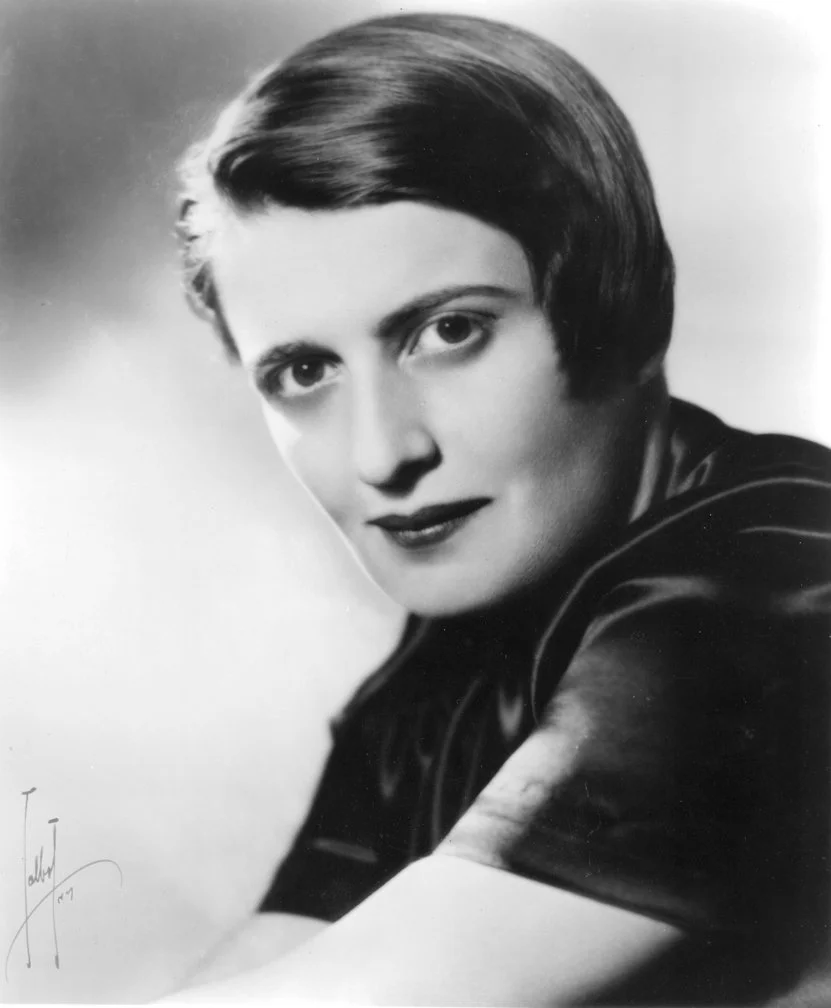
Early Works: Novels and Plays
Rand’s early creative output focused on the struggle of the individual against the state:
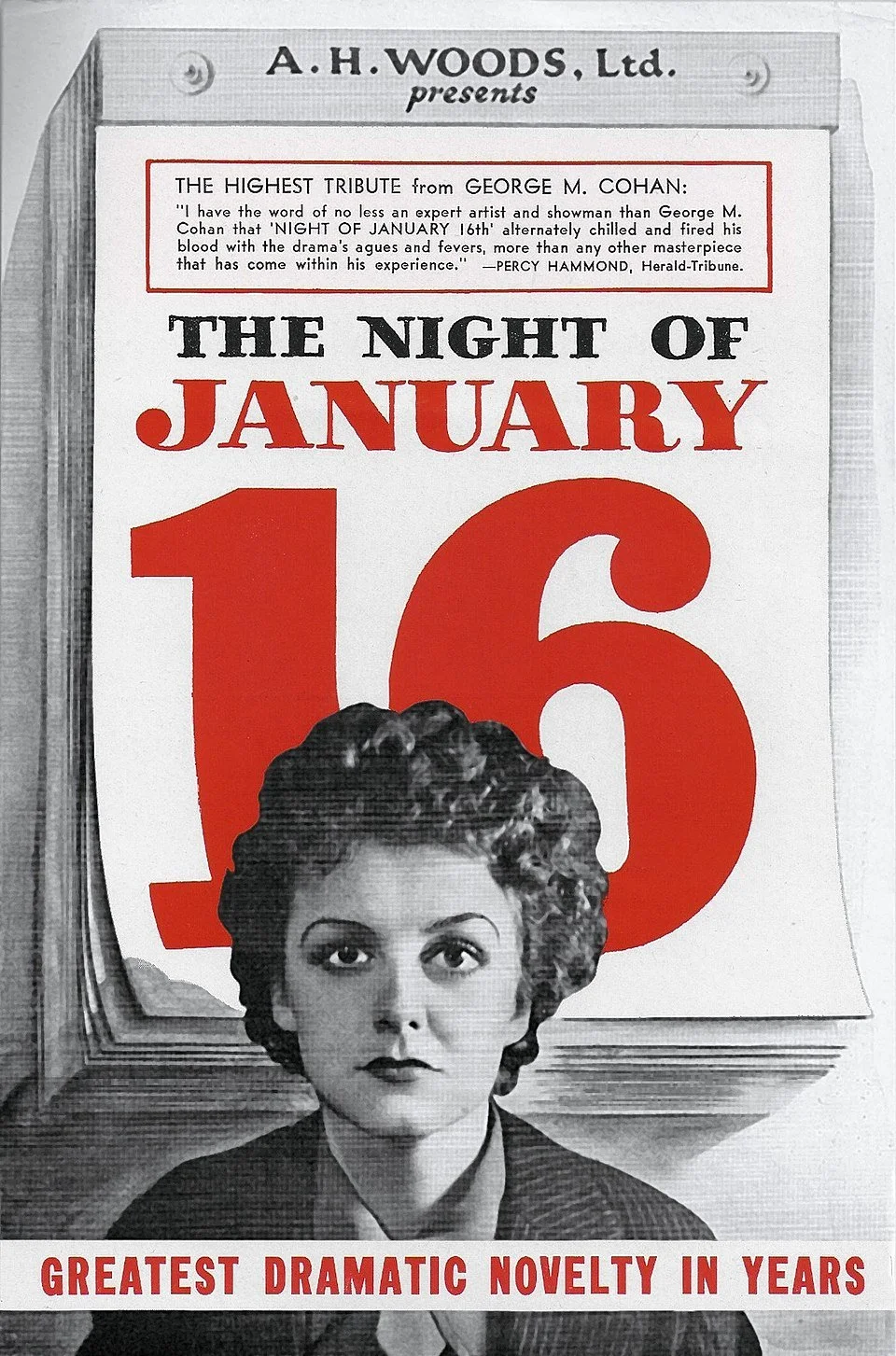
Night of January 16th (1934)
A courtroom drama (originally titled Penthouse Legend) with a unique gimmick: members of the audience acted as the jury and voted on the verdict.
We the Living (1936)
Her first novel, which was largely autobiographical in its depiction of the brutality of Soviet life.
Anthem (1938)
A dystopian novella set in a future where the word "I" has been erased from the language, replaced by the collective "we."
Major works
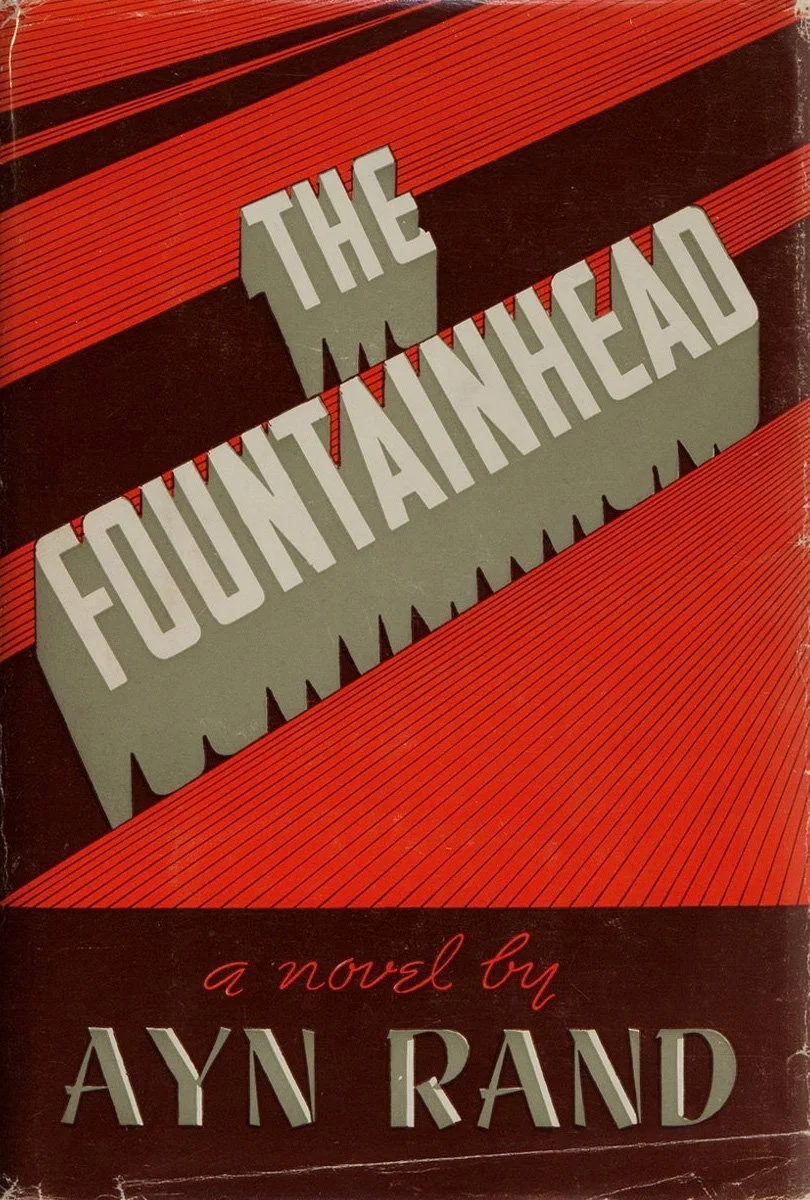
The Fountainhead (1943)
This novel served as Rand's first major literary and philosophical breakthrough. It tells the story of Howard Roark, an uncompromising modernist architect who chooses to struggle in obscurity rather than compromise his artistic integrity.
"The question isn't who is going to let me; it's who is going to stop me."
Though rejected by twelve publishers, it became a slow-burn bestseller, establishing Rand as a champion of "the ego" and the idea that man's highest moral purpose is his own happiness.
Atlas Shrugged (1957)
Considered her magnum opus, Atlas Shrugged is a massive philosophical mystery/thriller. The plot envisions a world where the "men of mind"- inventors, industrialists, and artists - go on strike against a parasitic, collectivist government that ceases to respect individual rights.
The novel introduced John Galt - the hero who "“stopped the motor of the world” - and laid out the full framework of her philosophy, moving beyond art into economics, politics, and metaphysics. It remains one of the most influential (and polarising) books in American political thought.
Non-Fiction Works
In the 1960s and 70s, Rand pivoted from fiction to essays to formalise her philosophy. Key collections include:
The Virtue of Selfishness (1964): An argument for rational altruism as a moral error.
Capitalism: The Unknown Ideal (1966): A defence of capitalism as the only moral social system.
Introduction to Objectivist Epistemology (1979): A technical overview of Ayn Rand’s theory of concepts.
Objectivism: The Philosophy of Ayn Rand
While Rand wrote extensively, she never produced a comprehensive textbook of her entire system. That task fell to her hand-picked intellectual heir, Leonard Peikoff.
Rand spent years working closely with Peikoff, overseeing his lectures and ensuring his interpretation of her work was precise. Though published after her death in 1982, Objectivism: The Philosophy of Ayn Rand is considered the definitive, authorised map of her thought, largely thanks to the decades of direct mentorship and collaboration she provided to Peikoff.