
Marx’s Labour Theory of Value
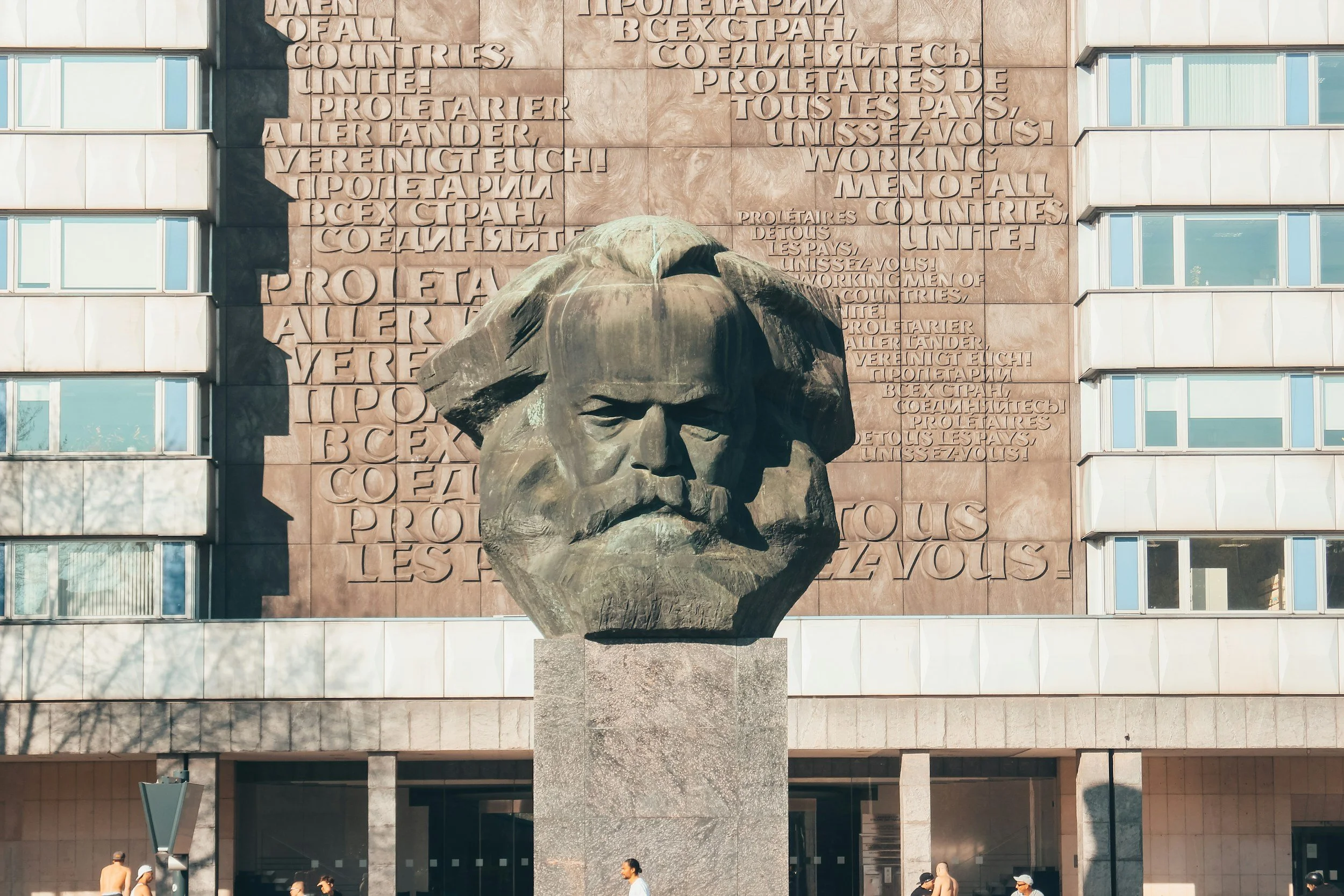
Marx’s Theory:
On the Marxist theory, only labour produces value. The difference between the labour that pays for itself, in the form of wages or “variable capital”, and the additional labour value that flows to the capitalist is “surplus value”. Machines are a form of “constant capital”, and they do not contribute to surplus value. Nor do machines, on this theory, create any new wealth; they merely “transfer” the labour value that went into building them into the totality of the products they create throughout their useful life.
Capitalists seek to maximize surplus value in two ways: by increasing labour hours and by increasing productivity through capital (that is, non-labour inputs to production, such as machines). The first approach has an upper limit, since workers’ hours can only be increased to a certain point. The second approach has no such limit. New technologies increase an individual capitalist’s profits insofar as they enable the production of more commodities with fewer inputs, allowing the capitalist to sell at a lower unit price and thereby gain a competitive advantage. However, as other capitalists follow suit, the comparative advantage of any given capitalist diminishes. Meanwhile, a diminishing labour force, relative to capital, results in a diminishing rate of exploitation and a slowing in the creation of surplus value. Combined with increased investment in constant capital, this leads to a falling rate of profit, as given by the equation:
Rate of profit = surplus value / (constant capital + variable capital)
Factions of Marxism differ in their theories of crisis, but all accept the falling rate of profit, caused by technological advancement, as central. This dynamic increases the tension between the two contradictory elements within the capitalist system: capitalists and workers. Labour is rendered increasingly obsolete, creating a class of unemployed workers willing to enact a revolution. Capitalists begin to see diminishing returns on their investment, as fewer workers are employed and thus able to purchase their commodities. Alternatively, if workers embrace reformism and take it too far, capitalists will close their operations. When markets can no longer be expanded through imperialist conquest, this results in more production and less consumption, and in the zenith of workers’ alienation from their commodities. Whichever path this process takes, crisis and revolution are said to follow.
Critique:
Marx’s theory is false for the reasons that follow. Labour is not the primary factor of production; rather, it is the thought that organises labour and capital to create and sell products. This is supplied by the capitalist. Machines do create value: customers make purchases based on a good’s price relative to their need for it, given the alternative ways they could spend their money. Whether a good was produced by a human or by a machine is irrelevant. Marx takes the technological innovation required by his theory for granted. Yet technological innovation is the clearest example of human intelligence, rather than labour as such, creating new wealth. He also fails to consider how increased productive capacity creates new opportunities for workers in previously nonexistent fields, such as, to take a modern example, how the invention of the Internet created numerous new industries and forms of employment.